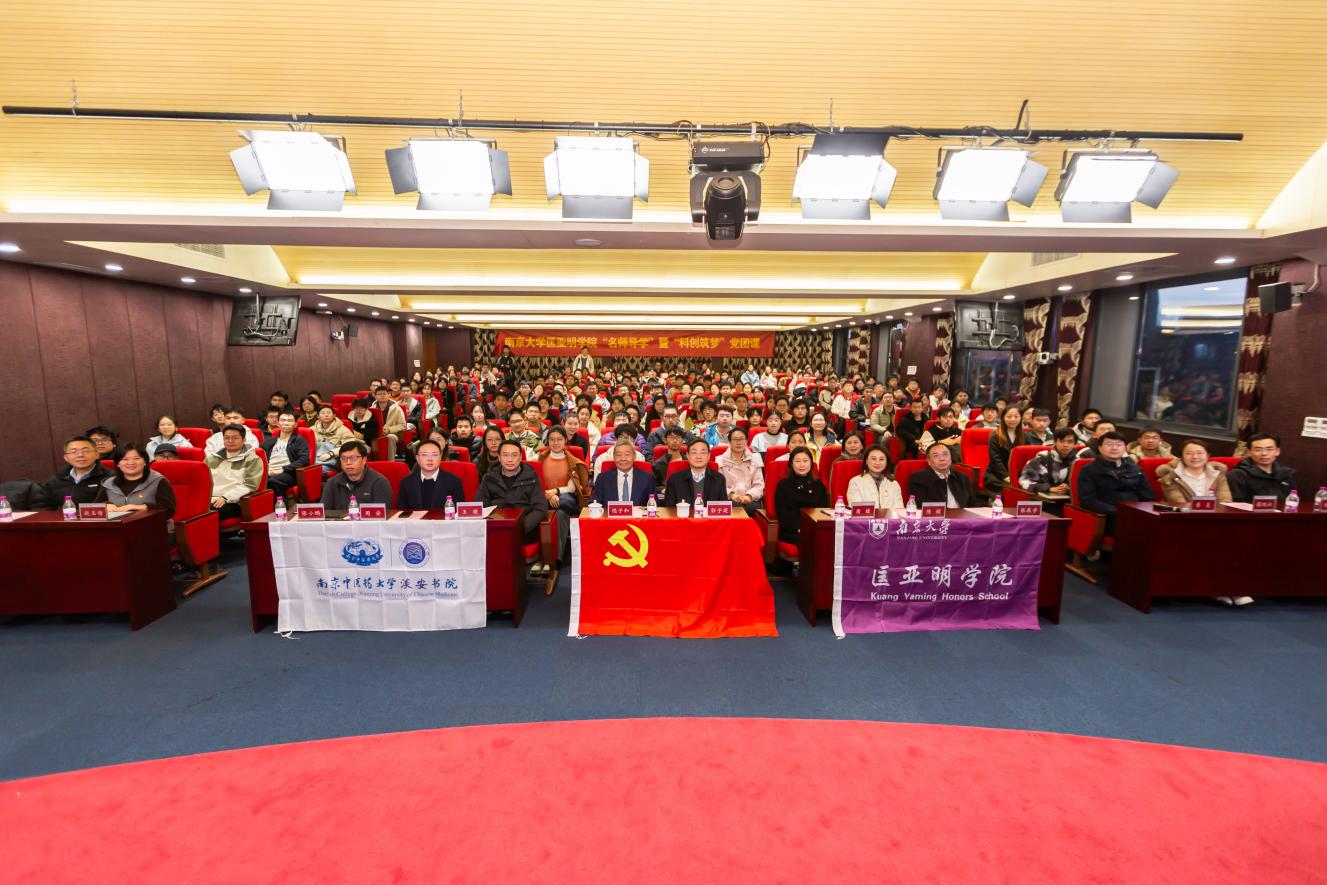
On December 17, 2025, Kuang Yaming Honors School held the 2025 Master Lecture Series and the 24th session of the “Scientific Innovation for Aspirations” Party and League Course on Current Affairs and Policies, as part of its “Four Decades of Excellence, Grounded inTruth and Innovation” 40th-anniversary celebration event. Professor Rao Zihe from Tsinghua University and Academician of the Chinese Academy of Sciences was invited to deliver a special report titled “Pathogens & Universal Health: Small-Molecule Drugs, Vaccines, Antibodies—From Entry, Transcription-replication to Assembly and Drug Development.” Attendees included Guo Zijian, Academician of the Chinese Academy of Sciences, Executive Dean of the School of Frontier Sciences, Nanjing University, and Dean of the Chemistry and Biomedicine Innovation Center, Nanjing University; Zhang Chenyu, Dean of the School of Life Sciences; Zhou Yuan, the Secretary of the Party Committee of Kuang Yaming Honors School; Zhou An, Deputy Secretary of the Party Committee; Dong Hao, Deputy Dean; Hu Jinglei, Assistant to the Dean; Chen Juan, Deputy Party Secretary and Deputy Dean of Dan’an College, Nanjing University of Chinese Medicine; and over 200 faculty and students from across the university. The lecture was chaired by Wang Jun, Dean of the Undergraduate College and Dean of the Kuang Yaming Honors School.
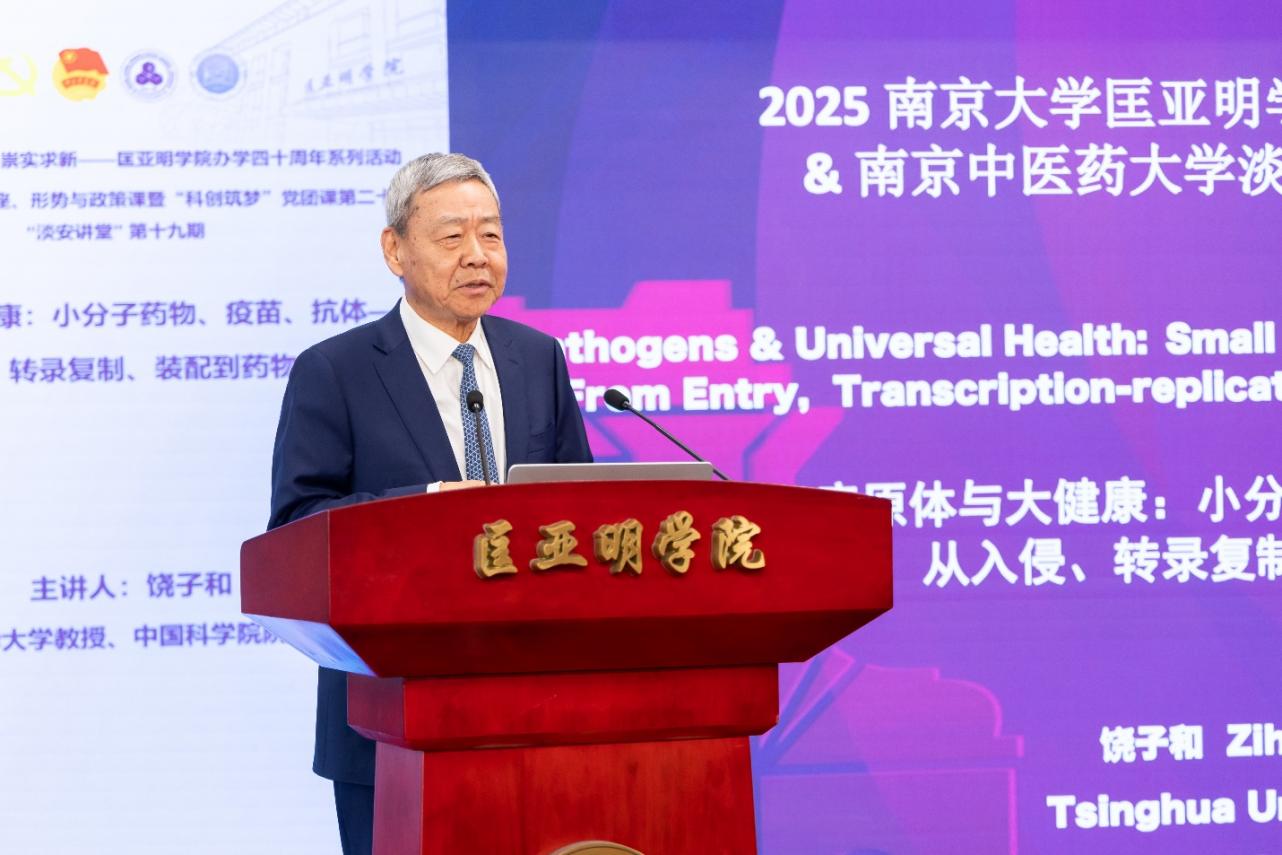
Focusing on the theme “Pathogens and Universal Health,” Rao Zihe systematically presented his team’s research journey and key contributions in the field of structural biology of pathogens, highlighting the close integration of basic research and public health needs. Using animations and models, he vividly illustrated the complete life cycle of pathogen entry, transcription, replication, assembly, and release, showcasing major original and groundbreaking achievements in revealing the structural biological characteristics and mechanisms of various infectious disease pathogens, including influenza viruses and coronaviruses. In accessible terms, he introduced his team’s progress in translating research outcomes into applications, such as designing viral inhibitors and developing vaccines. He emphasized the importance of following sound research approaches, conducting organized team-based research, strengthening domestic and international collaboration, and persevering with dedication in advancing scientific research. Additionally, he shared his team’s research ethos of “cohesion, persistence, integration, cultivation, openness, and inclusivity,” encouraging students to focus on key scientific questions in pathogen life cycles, deepen interdisciplinary integration, stay true to the mission of scientific inquiry, aim for global frontiers, dare to innovate, overcome challenges, and strive to contribute to human health.
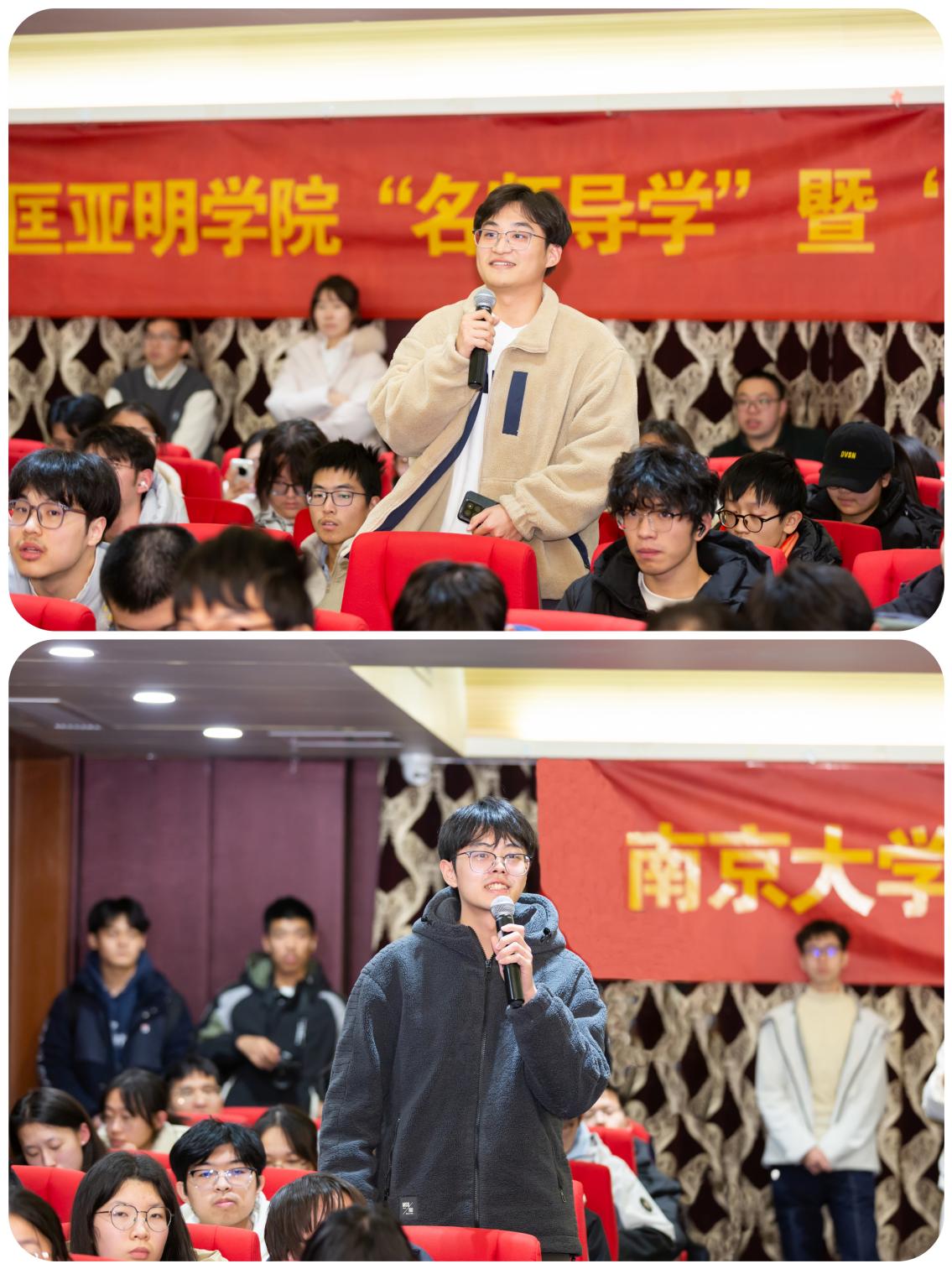
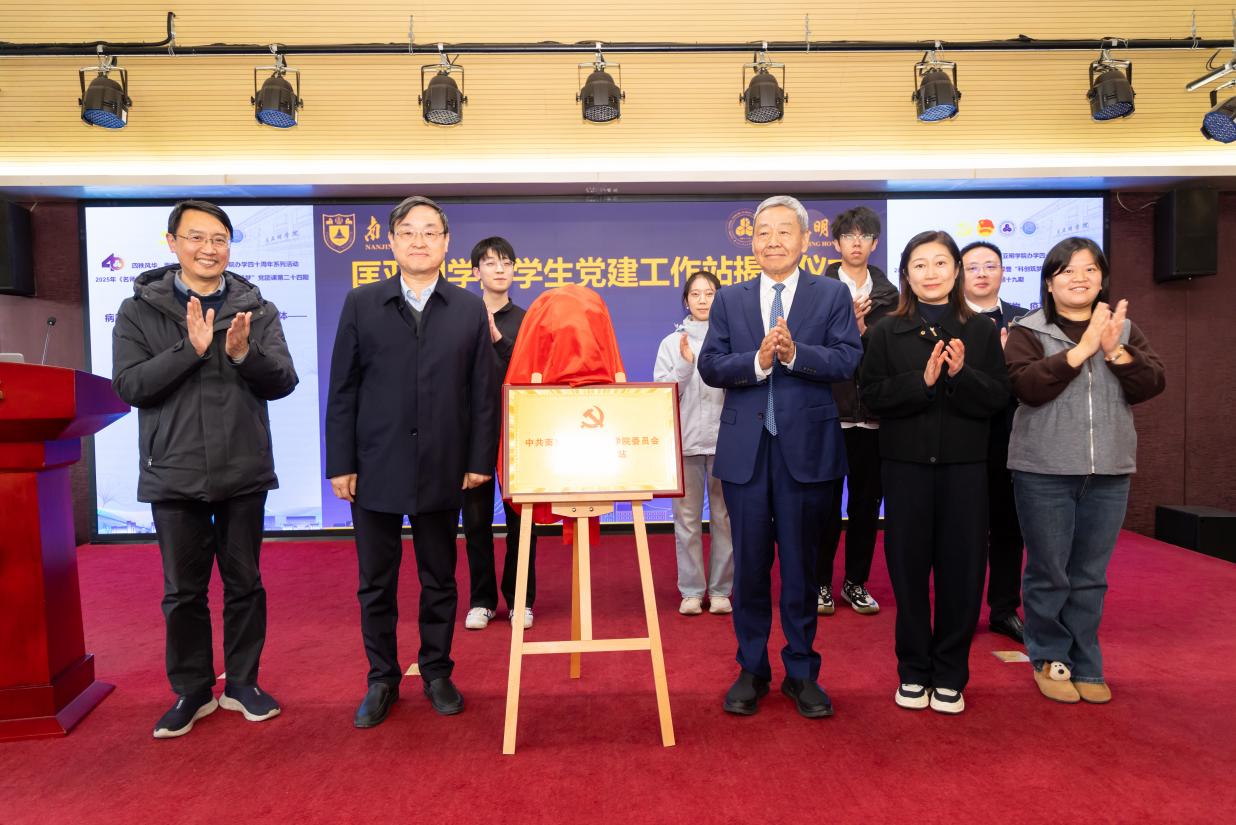
During the event, Rao Zihe, Guo Zijian, Wang Jun, Zhou Yuan, and student Party branch representatives jointly unveiled the Student Party Building Workstation of the Kuang Yaming Honors School Party Committee. In the interactive session, faculty and students engaged in in-depth discussions on topics such as the proportion and development trends of computational methods in structural biology, and the application of AI technology in drug development and vaccine design. Rao Zihe emphasized that experimental research serves as the cornerstone of the entire scientific research system, and the advancement of computational methods must be closely grounded in the long-term accumulation and refinement of experimental data. He encouraged young students to strengthen the organic integration of experimental research and computational methods, continue to innovate in interdisciplinary fields, and strive for scientific excellence.
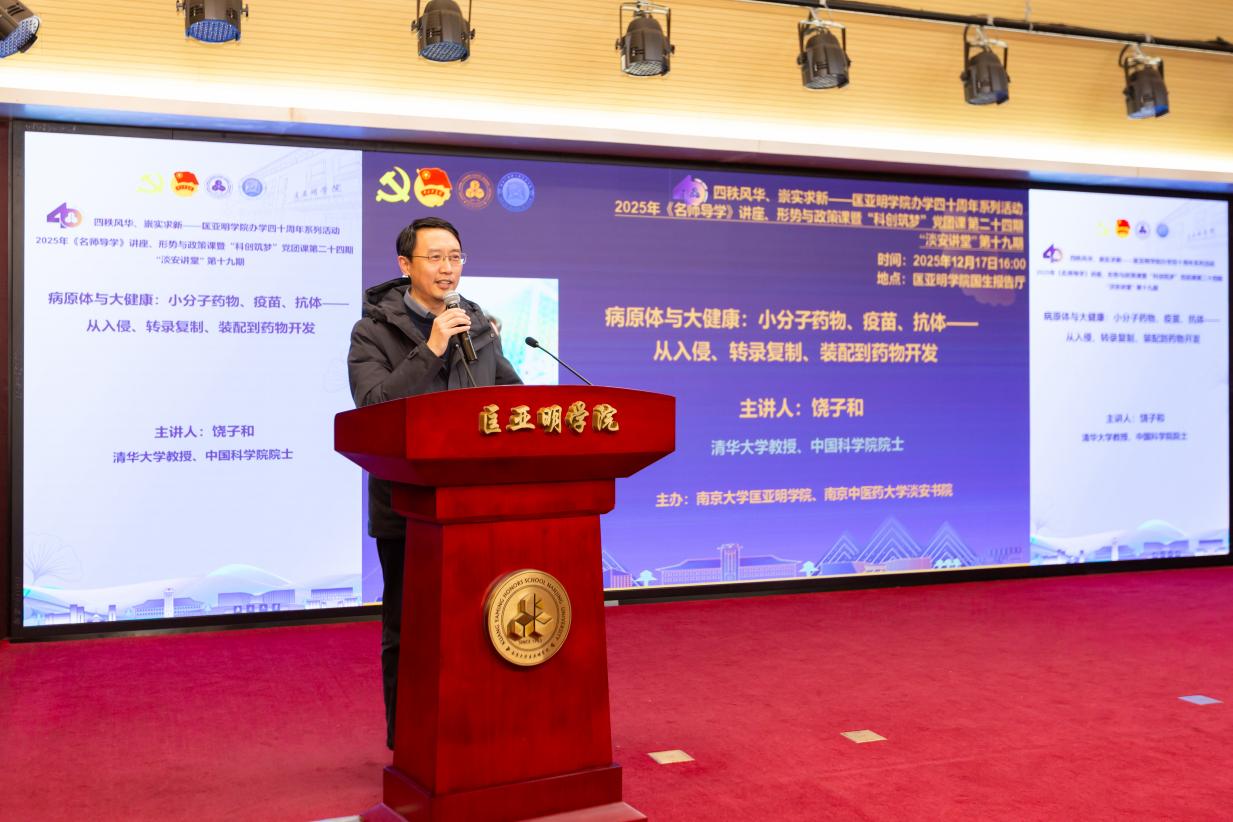
Wang Jun concluded that Academician Rao’s lecture not only offered a glimpse into cutting-edge international scientific landscapes and the inspiring stories of research teams overcoming challenges, but also deeply conveyed a heartfelt commitment to serving the nation and its people, as well as a spirit of pursuing truth and rigorous scholarship. Moving forward, the School will further guide faculty and students to stay grounded, focus on frontiers, and continue advancing in the cultivation of talents in general sciences, breakthroughs in scientific research and innovation, and interdisciplinary integration, contributing to the accelerated development of the “First Nanjing University.”
Writer: Wang Yihe